Summary
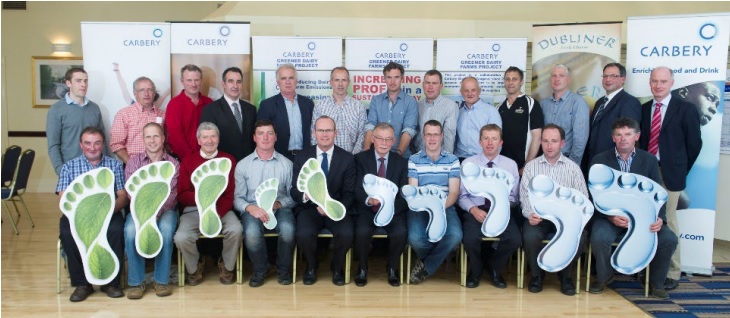
Greener Dairy Farms™ is a dairy efficiency contract solution introduced by Carbery Group (a global leader in food ingredients, flavours and cheese) and Teagasc (state body which provides research, advisory and training to the agricultural and food sector in Ireland) to measure, monitor and optimise resource allocation and best practice in environmental sustainability on the dairy farm. The programme was set up in 2012, starting with 12 dairy farmers and now extends to 62 dairy farmers, all of whom are members of the cooperatives that own Carbery. Each farm has been assessed for carbon footprint, water and energy usage and soil fertility and a baseline created. Based on this assessment, various environmental efficiency measures have been introduced to improve performance and achieve financial savings. The programme was based on a previous European project called the Dairyman Project, where 120 dairy farmers in 10 regions of North West Europe which focused on farm resource efficiencies and management. Carbery was the first to start such an endeavour in Ireland. While all the farms are not adjacent to each other, they are all located within a relatively small territorial area.
Objectives
The overall purpose of the project is to raise the awareness of sustainable dairy production methods among Carbery suppliers and to highlight areas where gains in terms of productivity could be made by monitoring farms within the catchment. The specific objectives are− To develop a baseline footprint for carbon, energy and water usage and soil fertility and to carry out an initial biodiversity assessment.
− To establish where efficiencies could be made by devising a management plan with the farmer.
− To disseminate the learnings.
Data and Facts - Contract
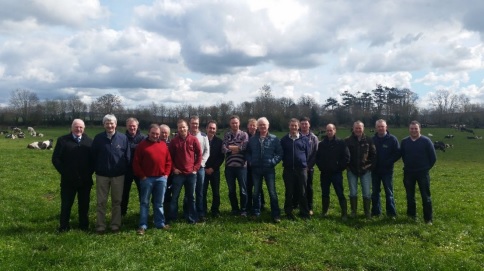
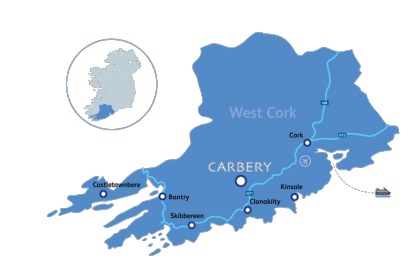
Participation: In the Greener Dairy Farms™ program, the 62 participating farmers, whose herd size ranges from 80 to 350 cows, are all full-time farmers. The area involved is the West Cork region in Ireland which covers approximately 1,900 Km2.
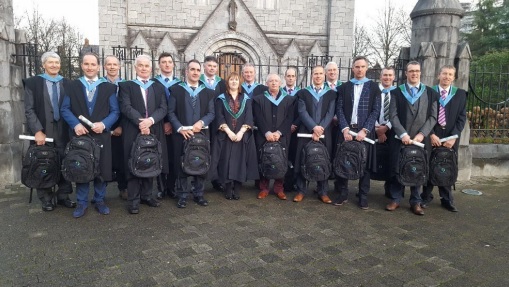
Involved parties: The primary contracting parties are the participating farmers, Carbery Group and Teagasc. This collaboration “utilizes veterinarians, milk quality advisors and discussion groups to advise farmers on how to improve their carbon footprint, as well as optimize water usage and soil nutrient management on the farm” (Origin Green, 2016 Sustainability Report). Bord Bia (the Irish State agency to promote Irish food) has used the model developed by the Greener Dairy Farms™ for their national Sustainable Dairy Assurance Scheme (SDAS). The farmers are also involved in the Teagasc Agricultural Sustainability Support and Advisory Programme (ASSAP) for the improvement of water quality. Carbery staff are supporting this programme through advice and mentoring of farmers. The local university (University College Cork) has partnered with the programme and has given farmer participants on the Greener Dairy Farms™ Recognised Prior Learning (RPL) to complete the Diploma in Environmental and Social Policy.
Management requirements for farmers: The key requirement is that each farmer is required to record relevant operational and environmental data which is compiled in an annual spreadsheet.
Controls/monitoring: CGDF monitors the participating farms in terms of the following: carbon footprint of a litre of milk produced by CGDF farmers; energy consumption on the dairy farms; water usage; financial sustainability of the farms; and soil fertility. These are monitored through the regular recording of relevant data and the input of Teagasc and Carbery agricultural advisors.
Conditions of participation: There is no minimum or maximum number of participants. One of the key requirements for the participant farmers is the submission of a completed spreadsheet of farm operational data (including water and energy usage, soil measurements, grazing days and so on). Submission of data is a requirement of participation.
Risk/uncertainties of participants: One of the key risks is stagnation of the project. However, discussions are underway on how to enhance the project over time through farmer incentives and the development of a demonstration zero-emission farm.
Funding / Payments: To introduce environmental efficiencies, various capital expenditure was required, such as the introduction of smart meters, plate coolers in milking parlours and water storage tanks. The funding was supplied by Carbery, State grants and, in some instances, the farmers themselves. Softer supports include subsidised training, knowledge exchange visits and hands-on support from agricultural advisors.
Problem description
Carbery Greener Dairy Farms™ was initiated by the sustainability department of Carbery Group Ltd in 2012. There was recognition that environmental pressures were going to increase in conjunction with the planned growth in herd sizes in response to the removal of the EU milk quota in 2015. The sustainability team recognised that there was a need to balance this growth with on-farm sustainability measures. In conjunction with Teagasc (the state body for research, advisory and training services to the agricultural and food sector), the programme was developed. While based on the Dairyman Project in Europe, which focused on strengthening rural communities by improving farm resource management in a profitable way, Carbery was the first to initiate such a project in the dairy sector in Ireland.
Context features
Landscape and climate: The landscape is very mixed, ranging from very fertile low-land to mountainous peatland. The climate is moderate with cool winters and warm summers.
Farm structure: The participating farmers in Greener Dairy Farms™ are all intensive dairy farmers. The farms range in herd size from 80 to 350 dairy cows. The farms are wholly owned by the farmers and each farmer is a member of a dairy co-operative and, in turn, an owner of Carbery Group. All farmers are full-time.
Success or Failure?
The project can be deemed a successful contract solution because it has reduced carbon emissions, raised awareness on water use, increased farm profitability, reduced energy use, and educated on the importance of sustainable dairy production. Between 2012 and 2019, the contract solution expanded from 12 to 62 participating farmers.
Reasons for success :
• Attitude of participating farmers - very positive attitude, openness and willingness to engage, trust in Carbery.
• Strong Carbery/Teagasc team behind the project - highly motivated and innovative team.
• Clear benefits to the farmers from participation.
SWOT analysis
Main Strengths
1. Locally based supported by an embedded co-operative infrastructure which is highly trusted2. Strong institutional support from the Carbery/Teagasc Team - farmers are proud to be part of CGDF and have become active ambassadors for Carbery and the project
3. Highly measurable and demonstrable outcomes
Main Weaknesses
1. Verbal contract which could potentially weaken the project2. As efficiencies plateau, the incentive to participate may diminish
Main Opportunities
1. Leveraging from the CGDF project to develop other funded initiatives such as a zero emissions demonstration farm2. Developing a premium market for low-carbon footprint dairy products
3. Expanding into other areas of farm operation, such as health and safety, soil and biodiversity
Main Threats
1. Participants reaching a plateau in terms of efficiencies gained and thereby possibly reducing their commitment
OTHERS
Savings through environmental efficiencies and capital grants
PUBLIC GOODS
Farm animal health and welfare
Biodiversity / (Farmland) biodiversity
Soil quality (and health) / Soil protection
Water quality
Climate regulation-greenhouse gas emissions / Climate protection
INDIRECT EFFECTS
Carbery also highlights the improvements in product quality which have value chain benefits. The public goods from this project are: improved carbon footprint of the farms; viability of farms through greater efficiencies; evolving ecological mind-set of farmers; selfesteem of the farmers; and spill-over into the wider community (educational events, employee sustainability commitments, carbon footprint, water retention).
LOCATION
Éire/Ireland
CONTRACT
Contract conclusion:
Verbal agreement / handshake
Payment mechanism:
Savings are used as a payment mechanism.
Start of the program:
2012
End:
on going
Feel free to contact us for any further informations.
CONTACT USLegal notice: The compilation of the information provided in the factsheets has been done to our best knowledge. Neither the authors nor the contact persons of the presented cases may be held responsible for the use which may be made of the information contained therein.