Summary
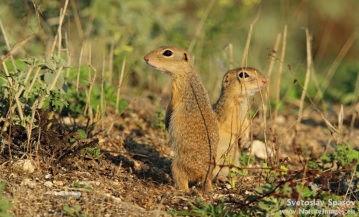
The project began in 2007 with the idea to cover one of the most important public goods - biodiversity. It included 54 farmers in the region, whose lands were in NATURA 2000 sites. The leading organization is the Bulgarian Society for Protection of Birds, which is an NGO. They financed the project through the mechanism of the Global Environmental Fund. The area covered is the Besaparsky Ridge, which is in South-central Bulgaria. The main activities which were initially funded by the project were for pasture maintenance (payments per ha) and for buying machinery (lawn mowers, tractors, balers). The goal is to maintain and conserve the pastures throughout the year by limited mowing and in a timetable that is directly connected with the breeding birds; and for maintaining the grass for the European ground squirrel. The monitoring includes quarterly checkups by the team for certifying that the farmers are covering the requirements. After the project ended in 2010 the farmers were able to keep the machinery bought under the projects and to continue using it. A side activity of the project was the organization of an annual festival called the “Red pepper” which main goal is to popularize the biodiversity and traditions in the region, to provide place for the local farmers to present their production, and to increase the knowledge of the locals on the importance of the endangered bird species in the region. The festival takes place every year for 10 years now.
Objectives
1. To protect the local biodiversity in the area: breeding birds, European ground squirrel and raptors.2. To encourage the involvement of farmers into schemes for biodiversity conservation.
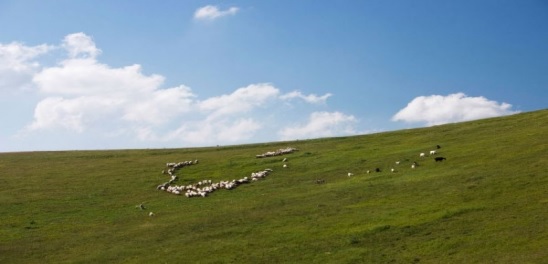
Data and Facts - Contract
Participation: In this case study 54 farmers are involved.
Involved parties: The contracting parties are the Bulgarian Society for Protection of Birds and the farmers. The role of the association is leading because it manages the project, coordinates it, performs the monitoring activities and it is the main source of popularization about the importance of the biodiversity conservation in the region.
Management requirements for farmers: The maintenance of the pastures includes several requirements: the farmers can’t use mineral fertilizers and plant protection products; it is forbidden to plough the permanent grassland or to build new drainage systems. Farmers must perform manual mowing or with slow mowers, mow from the centre to the periphery or from one end of the mower meadow to the other at low speed. The cut grass is dried and harvested. Farmers maintaining permanent grassland through grazing must maintain the stocking density.
Controls/monitoring: The monitoring is done by biodiversity experts several times per year. The farmers must keep the requirements connected with the mowing timetable and the techniques for slow mowing.
Renewal/termination: After the project ended the farmers were eligible to apply for government subsidies for the same activities for 5 years.
Conditions of participation: The main requirement is the agricultural land to be part of NATURA 2000 sites. The monitoring of the requirements is done by the Bird association which also determines the payments for the efforts done by the farmers. The requirement is to take part in the project for 3 years. The consequence for non-compliance is termination of payments.
The system of payment: The financing at first was from the Global Environmental Fund via the Bulgarian Society for Protection of Birds as a contractor. The main requirement for the farmers was their lands to be within the NATURA 2000 sites and to engage for a period at least of 3 years to conserve pastures and the population of European ground squirrel and nesting birds. The payments were in two directions – payments for the efforts made per/ha and for buying machinery which is used for maintenance of the meadows. Currently the farmers receive subsidies by the government under one of the agri-environment measures.
Problem description
The main driving force for this project was the need to assess which agrienvironmental measures can be suitable in High-nature value pastures, so that farmers would be motivated to initiate their implementation. The need comes from the fact that there is a seriously high risk of destruction of the habitats of important breeding birds and European ground squirrel with direct effect also on predatory birds. The most serious problem leading to the loss of valuable habitats is the gradual conversion of pastures and meadows into vineyards.
Context features
Landscape and climate: Besaparsky ridges are a protected area - part of the Bulgarian and European ecological network Natura 2000, announced by an order of the Ministry of Environment and Waters from 2008 in order to protect and maintain in favourable condition protected and endangered species of birds of prey and their habitats. There are 86 species of breeding birds found in Besaparsky Ridges, 20 of which are included in the Bulgarian Red Book (for endangered species).
Farm structure: The targeted type of farming is pastures with special requirements for their management. The practices include timetable for the mowing periods of the year. The predominant farm size is small, with organic farming still small percentage. Part of the land is owned by the farmers included in the case study and the rest is under contracts with other landowners.
Success or Failure?
The case is defined as successful due the fact that within the time of the project 54 farmers took part and after the project finished they are eligible to enrol into government program for implementing the same conservational activities. Keeping in mind that there is a tendency of turning pastures into arable land, the farmers who took place in the project are a good example of maintaining the biodiversity in the region by implementing conservation practices. After the project was finished these farmers continued to implement the good practices until this moment and the monitoring shows that the population of the European ground squirrel increased and together with that the number of the endangered King Eagle and the Long-legged buzzard.
Reasons for success :
• The project succeeded in creating conservation practices by farmers, the implementation continued after the project was finished.
• Raising awareness and knowledge of the local community about the European ecological network Natura 2000, its benefits and the resulting opportunities for local development.
• Enhancing the skills of local farmers to use agri-environmental schemes for conservational agriculture.
SWOT analysis
Main Strengths
1. The farmers have developed skills in managing their agriculture activities in conservational manner2. The local community of farmers organizes each year local festival of the traditional local foods
3. The conservation practices continues after the project finished.
Main Weaknesses
1. The conservational efforts are concentrated mainly in pastures excluding other arable land in the region2. Currently there are very little opportunities for conservational agriculture apart from the one created during the project
Main Opportunities
1. The region can be promoted as a “protective birds” farming and to add a value on the products marketed as Bird friendly2. The traditional festival «Red pepper» is getting more attention, therefore popularizing the place as touristic destination with high biodiversity
3. Opportunities for environmentally friendly farming are getting the attention of more farmers in the region
Main Threats
1. High risk of pesticide use which can lead to diffuse pollution even in agricultural lands with conservational practices2. At the moment the market doesn’t distinguish meat coming from high-value pastures and traditional ones which cannot motivate more farmers to take initiatives for bird friendly agriculture.
3. Still there are examples of turning natural pastures into arable land for the purposes of intensive agriculture in the region which can endanger the local biodiversity

LAND TENURE
It is land based, because choosing the land is based on its conservational importance (which farm should be included in the contract). Some of the land is owned, some is rented. However the implemented measures are practice-based
PUBLIC GOODS
Landscape and scenery
Rural viability and vitality
Biodiversity / (Farmland) biodiversity
FURTHER GOODS
Cultural heritage by organizing the festival «Red pepper» the main goal of which is to popularize the biodiversity and traditions in the region.
LOCATION
Bulgaria
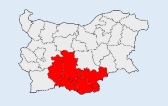
The Besaparsky ridges - Plovdiv municipality in the Southcentral region of Bulgaria.
CONTRACT
Contract conclusion:
Written agreement
Payment mechanism:
Incentive payments
Funding/Payments:
The farmers receive subsidies by the government under one of the agrienvironmental measures.
Start of the program:
2007
End:
2010
Feel free to contact us for any further informations.
CONTACT USLegal notice: The compilation of the information provided in the factsheets has been done to our best knowledge. Neither the authors nor the contact persons of the presented cases may be held responsible for the use which may be made of the information contained therein.